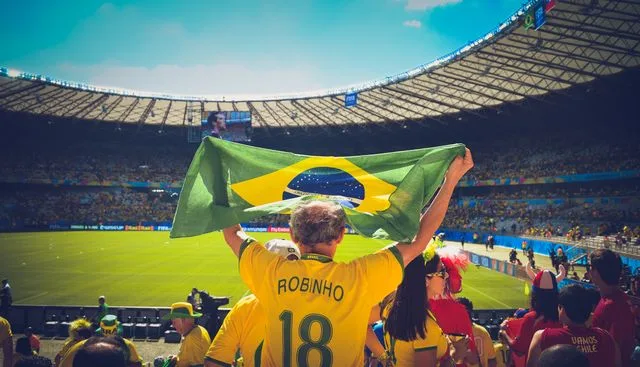
This is where the World Cup stops being simple. And honestly, that is exactly why these upcoming matches matter so much.
Why the final group-stage stretch feels so tense
The 2026 World Cup has created a strange and fascinating middle ground between safety and panic.
Some teams are already through. Some are already out. But the most interesting teams are stuck in between. They are alive, but not comfortable. They can see the Round of 32, but they have not stepped into it yet.
That is where the drama sits.
With 48 teams split into 12 groups, the tournament needs 32 teams for the first knockout round. The 24 automatic places come from the group winners and runners-up. The remaining eight places go to the best third-placed teams.
This is good for suspense. I will say that clearly. More teams stay alive for longer, and more final group matches actually matter.
But it is not good for simplicity.
A practical fan does not want to solve a football spreadsheet at 2 a.m. The fan wants to know one thing: what does my team need?
Win? Draw? Avoid a heavy loss? Score more goals? Hope another team does not win by five?
That is the real story of this final group-stage window.
In a normal match, a late consolation goal often feels like decoration. Here, it can change everything. A 3-1 defeat and a 3-2 defeat are not the same. A 1-0 win and a 5-0 win are not the same. Even yellow and red cards can matter if teams are tied deep into the ranking rules.
This is why the upcoming matches are more than fixtures. They are moving pieces in a larger qualification puzzle.
The teams that understand both the opponent and the table will have the advantage. The teams that treat this like a normal group match may regret it.
Croatia vs Ghana: pressure on one side, opportunity on the other
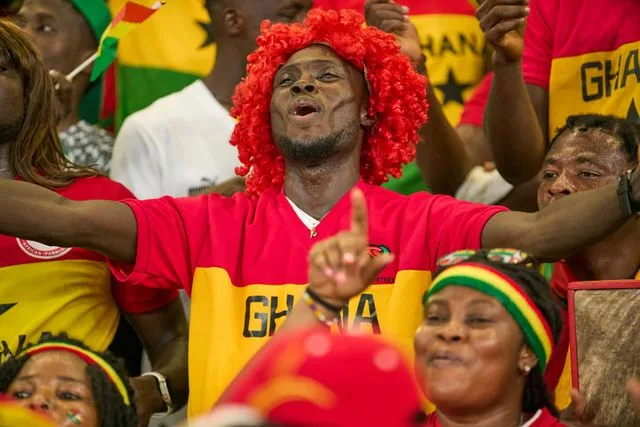
Photo by @aderawilson on Pexels
Croatia vs Ghana is one of the most important matches in this final group-stage stretch.
On paper, it looks like a normal Group L fixture. It is not. Croatia’s situation is uncomfortable because they are close enough to qualify but not safe enough to relax. A win or a draw should be enough to take them through. A defeat would throw them into the third-place table, where goal difference and other results start doing the damage.
That is not where any serious team wants to be.
Ghana have a different kind of motivation. Their qualification picture is stronger, but the match still matters because group position matters. Finishing first, second, or third can change the Round of 32 opponent. That matters more than some fans admit.
This is one of the lazy mistakes people make during the final group stage. They say, “That team is already through, so the match does not matter.”
Wrong.
At a World Cup, the route matters. A cleaner knockout path can keep a team alive longer. A bad draw can punish even a good side. The difference between the first and the second is not cosmetic. It can decide whether a team gets a manageable Round of 32 match or walks straight into danger.
For Croatia, the task is blunt: avoid defeat. For Ghana, the prize is control. They can use the match to strengthen their position and shape the bracket around them.
And for the teams waiting below the cutoff, this match is terrifying. A Croatia point could shut one door. A Croatia loss could open another.
That is what makes it such a watchable game.
Colombia vs Portugal: not survival, but control
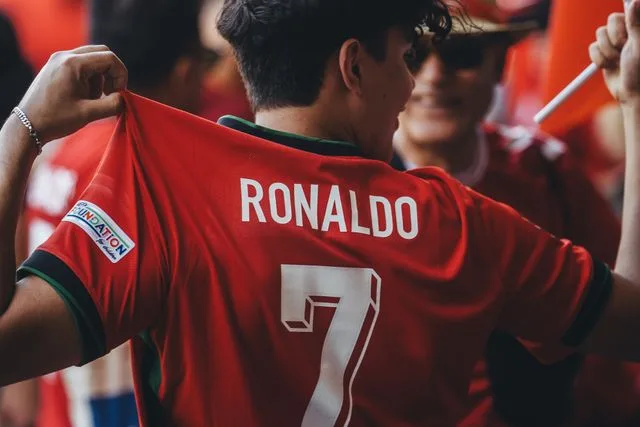
Photo by @omar-ramadan-1739260 on Pexels
Colombia vs Portugal is a different kind of important.
This is not only about staying alive. Both teams are in strong positions, but the match can decide who finishes top of Group K. That is a big deal.
The winner takes control of the group. If the match is drawn, Colombia are expected to stay ahead. That gives the game a sharp competitive edge, even if both teams are not facing immediate elimination.
I like these matches because they reveal ambition.
A cautious team says, “We are already through. Let us manage the game.”
A serious contender says, “Let us win the group and make the bracket respect us.”
Portugal have the pedigree, the names, and the expectation. Colombia have looked like a side that should not be treated as anyone’s warm-up act. This is exactly the sort of match that can tell us whether a team is merely qualifying or building toward a deeper run.
There is also a psychological layer.
Winning a group does not guarantee anything. Football does not work that neatly. But it changes the mood. It sends a message to the dressing room and to everyone watching. It says: we are not here to sneak through.
That matters in knockout football.
The Round of 32 is not far away. From that point on, there are no repair jobs. No second chances. No “we will fix it in the next group game.” A team that enters the knockout stage with rhythm and confidence has an edge, even if it is not always easy to measure.
So yes, Colombia vs Portugal matters.
Not because both are desperate. Because both should want more than survival.
DR Congo vs Uzbekistan: the desperate equation
DR Congo vs Uzbekistan may be the most ruthless match of the bunch.
For DR Congo, the equation is simple and brutal: win, or go home. A draw does not appear to be enough. A defeat ends the conversation.
That clarity can help a team. It removes overthinking. There is no complicated emotional negotiation with the table. DR Congo know what they must do.
But simple does not mean easy.
Uzbekistan’s situation is even harder because their goal difference leaves them needing something close to a football miracle. A normal win may not be enough. They likely need a heavy win, the kind of scoreline that changes the entire third-place table.
That is a horrible tactical problem.
If you need only a win, you can play with patience. You can manage risk. You can wait for your moment.
If you need a big win, patience becomes dangerous. Every passing minute hurts you. Every missed chance feels bigger. Every counterattack against you becomes a threat not just to the match, but to the whole qualification dream.
This is where matches become wild.
A team chasing multiple goals cannot defend normally forever. It has to open up. It has to take shots earlier. It has to send more players forward. That creates gaps. And gaps create chaos.
For neutral fans, this could be one of the best games to watch because desperation changes football. It makes teams do things they would never do in the first game of a group stage.
For DR Congo, the clean target is victory.
For Uzbekistan, the target is not just victory. It is a statement on the scoreboard.
That is a much harder job.
Algeria vs Austria: the cleanest qualification fight
Algeria vs Austria may be the cleanest qualification battle on the schedule.
The winner should move into the Round of 32. If the match ends in a draw, both teams may be able to survive, depending on the final table and tiebreakers. That makes the match tactically fascinating.
Austria have a strong reason not to be reckless. A draw can be useful. A controlled performance may be enough. That does not mean they will play passively, but it does mean they do not need to turn the game into a street fight from the first whistle.
Algeria’s decision is more delicate.
Do they attack for the win and remove doubt? Or do they protect the draw and trust the table?
That sounds like a calm tactical question. It is not. In a World Cup match, protecting a draw for too long can become a trap. The team drops deeper. The opponent gains territory. The crowd senses nerves. One set-piece, one deflection, one bad clearance, and suddenly the safe plan looks foolish.
This is why I prefer teams that take control of their fate when they can. Waiting for the table to rescue you is a dangerous habit.
Still, there is a real trade-off. Attack too aggressively and Algeria could expose themselves. Sit too deeply, and they invite trouble.
Austria face the same psychological challenge from the other side. They may not need to chase the match wildly, but if they play only for a draw, they risk losing rhythm and initiative.
This is the match where the managers matter. Substitutions, tempo control, and game-state awareness could decide everything.
It is not the biggest-name fixture. But in terms of qualification meaning, it is one of the best.
England and Argentina still have work to do
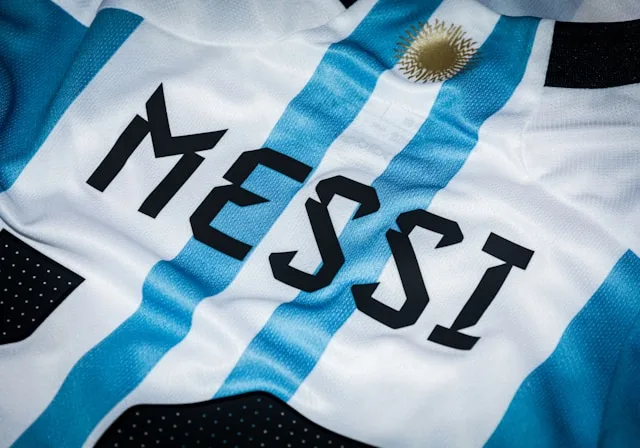
Photo by 磊 周 on Unsplash
England and Argentina are in a different category.
They are not in the same kind of danger as the teams fighting around the cutoff, but their matches still matter. England face Panama. Argentina face Jordan. Both opponents have already been eliminated, which makes the fixtures look less dramatic at first glance.
That is misleading.
For England, the issue is not basic survival. It is a group position and knockout path. A win can help them finish stronger and improve their route. A poor result could make the next stage more uncomfortable.
This matters because England are judged differently. For some teams, reaching the Round of 32 is success. For England, it is expected. The real question is whether they are building toward a serious knockout run or simply moving forward with questions attached.
That is a harsh standard, but it is the standard big teams live under.
Argentina’s case is also interesting. If a team has already won or secured control of its group, the manager has choices. Protect key players? Avoid injuries? Keep rhythm? Chase another win to maintain authority?
None of those choices is automatic.
Resting players sounds smart until the team loses sharpness. Playing starters sounds strong until someone gets hurt. Managing a World Cup squad is not only about the next match. It is about the next three, four, or five matches.
Argentina will know that better than most. They are not playing only to win a group game. They are preparing for knockout football.
And knockout football has a different smell. Every mistake gets louder.
How standings can change — and why goal difference is the real troublemaker
The standings can change in three main ways.
A team can win its group. A team can finish second. A team can finish third and hope to rank among the best third-placed teams.
The first two routes are clean. The third route is where the trouble begins.
Points come first. That is simple enough. But when teams are level on points, goal difference starts sorting them. If the goal difference is also level, goals scored matter. After that, disciplinary records and ranking rules can come into play.
That is why the final group matches are not only about the result. They are about the margin.
This is the part casual fans often miss. They ask, “Who won?”
At this stage, the better question is: “By how many?”
A 1-0 win may not help a team enough. A 4-0 win may change everything. A team that is already out can still affect the table by losing narrowly instead of collapsing. A late goal in stoppage time can push one team above another.
It feels unfair when it happens to your team. It feels thrilling when it saves your team.
That is tournament football.
The third-place table also creates a strange emotional reality. Some teams are already finished with their group matches and can do nothing. They become scoreboard watchers. They need other teams to fail, or at least not win by enough.
That is not a comfortable place to be.
It is like waiting for exam results while someone else is still writing the paper.
The teams waiting nervously while others play
Some of the most dramatic World Cup moments do not happen on the pitch. They happen in dressing rooms, hotel lounges, and team buses, where players stare at screens and hope another result goes their way.
That is the strange world of the third-place table.
Teams such as Iran, South Korea, Scotland, and others around the cutoff can find themselves waiting while Groups J, K, and L finish their matches. They may not be playing, but their tournament is still alive. Or dying. Sometimes, both within a few minutes.
This is one part of the expanded format I am not fully sold on.
Yes, it creates drama. Yes, it keeps more nations involved. Yes, it gives fans more reasons to watch matches outside their own group.
But it also creates a slightly uncomfortable kind of suspense. A team can be eliminated not because it lost that night, but because another team in another stadium won by the right margin. That is thrilling for television. It is brutal for players.
Scotland, for example, may need several things to break in their favour. Iran and South Korea may be in better positions, but even they can be pushed into danger if enough results go against them. This is where the word “alive” becomes a little cruel.
Alive does not mean safe.
Alive means waiting.
And in this format, waiting can feel worse than playing.
Why already-qualified teams should still care
There is a common mistake fans make during the final group matches.
They think qualification is the finish line.
It is not.
Qualification is only the first job. The next job is getting the right route.
A team that finishes first may face a more favorable Round of 32 opponent. A team that finishes second may enter a tougher bracket. A third-placed qualifier may be rewarded with survival but punished with a brutal knockout draw.
That is why teams like England, Ghana, Colombia, Portugal, Argentina, and others cannot treat these matches casually.
The difference between first and second can change a tournament. The difference between the second and the third can be even bigger. In a knockout stage, one bad pairing can undo weeks of good work.
Of course, there is no such thing as an easy World Cup knockout match. That line gets repeated because it is true. But some paths are clearly better than others. Anyone pretending otherwise is being polite, not honest.
A team would rather face a tired, uneven opponent than a tournament favorite. It would rather travel less. It would rather keep momentum. It would be better to avoid extra emotional strain.
These things matter.
Football people know this. Fans sometimes underestimate it because the table makes qualification look binary: in or out.
But serious teams think in layers.
Are we through? Good.
Can we win the group? Better.
Can we avoid the worst side of the bracket? Now we are talking.
Once the Round of 32 begins, the mathematics disappears.
That is the best part.
No more third-place table. No more waiting for another group. No more “maybe a draw is enough if another team loses by two.”
It becomes simple again.
Win and advance. Lose and leave.
That is why the first confirmed Round of 32 fixtures already feel different. South Africa vs Canada is not about points. Brazil vs Japan is not about goal difference. Germany vs Paraguay, France vs Sweden, Netherlands vs Morocco, Australia vs Egypt, Argentina vs Cape Verde — these are knockout matches. They carry a different pressure.
South Africa vs Canada has a special story because both nations have reason to treat a knockout appearance as a major football moment. Brazil vs Japan has a completely different feel: one of football’s great powers against a Japanese side that has spent decades proving it belongs on this stage.
Those matches are coming quickly.
But before the tournament reaches that cleaner knockout drama, the final group-stage calculations must settle the field. That is what makes the upcoming matches so important. They are the bridge between two versions of the World Cup: the messy group-stage race and the ruthless knockout stage.
One is about possibilities.
The other is about consequences.
The smart fan’s guide: what to watch during these matches
If you are watching these games, do not watch them like normal fixtures.
Watch the table.
That is my honest advice.
Start with the points. Then check the goal difference. Then check goals scored. Then look at who is fighting for first, second, or third. If your team is in the third-place race, keep one eye on the live third-place table.
This is not overthinking. This is the actual story.
A team protecting a draw may suddenly need to attack if another match changes. A team chasing one goal may suddenly need two. A manager may make a substitution not because of what is happening in his own stadium, but because of a goal somewhere else.
That is why simultaneous matches are so tense. The match you are watching is connected to another match you are not watching.
Here is the simple checklist:
Watch who scores first.
Watch the goal difference swing.
Watch whether the losing team collapses or limits the damage.
Watch late goals.
Watch yellow and red cards if tiebreakers get tight.
And most of all, watch the teams that suddenly change their behaviour after news from another stadium.
That is where the real drama often appears.
A team that was calm starts rushing. A team that was attacking starts wasting time. A coach who looked relaxed suddenly sends on another forward.
The table speaks. The teams listen.
What this all really means

Photo by Fauzan Saari on Unsplash
The upcoming FIFA World Cup 2026 matches matter because they are doing two jobs at once.
They are finishing the group stage, and they are building the Round of 32.
Some teams are fighting to qualify directly. Some are trying to survive through the third-place table. Some are already through but still chasing a better route. Some are waiting helplessly, hoping the wrong team does not win by the wrong score.
This is not just football. It is football with consequences attached to every small detail.
That is why Croatia vs Ghana matters. That is why DR Congo vs Uzbekistan matters. That is why Algeria vs Austria matters. That is why Colombia vs Portugal matters even if both teams look strong. That is why England and Argentina still have something to prove, even against eliminated opponents.
The World Cup is moving from calculation to elimination.
Before it gets there, the table has one last argument to settle.
For fans, this is exactly the kind of chaos that makes the World Cup worth losing sleep over.