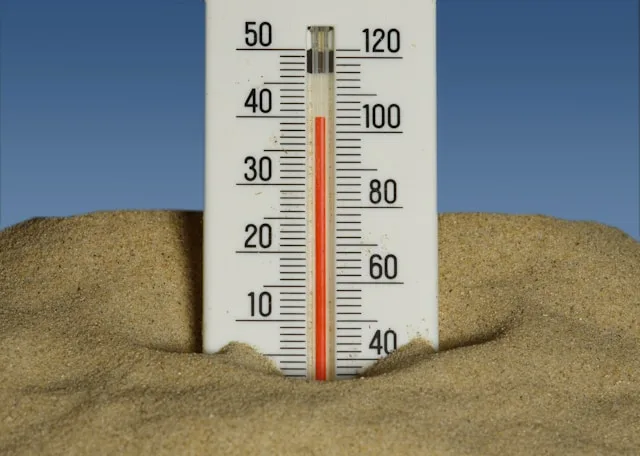
But they are part of the same uncomfortable lesson: the weather is becoming harder to manage because old seasonal expectations are not always enough anymore.
India should pay attention.
India is getting rain and heat at the same time
The mistake many people make is treating the monsoon like a switch.
Off: summer heat.
On: rain and relief.
That is not how it works.
The southwest monsoon is a moving system. It advances region by region. It can arrive strongly in one belt and weakly in another. It can bring heavy rainfall to one state while another waits under sticky, exhausting heat. Even within a state, one district can flood while another stays dry enough to worry farmers.
This is why the current Indian weather situation feels confusing. People hear that the monsoon has advanced, but their own city may still feel brutally hot. Someone in Delhi or parts of Uttar Pradesh may ask, “Where is the relief?” At the same time, someone in Assam, Meghalaya, Sikkim, or north Bengal may be worried about heavy rain, blocked roads, landslides, or river levels.
Both can be true.
That is the part most people misunderstand. A national weather headline does not describe everyone’s lived reality.
For ordinary people, this creates a strange mix of risks. Heat illness remains possible. Power demand can stay high. Outdoor workers still face dangerous exposure. Then, suddenly, heavy rain can disrupt travel, damage roads, flood low-lying areas, and create another kind of emergency.
This is not just uncomfortable weather. It is planning trouble.
A family planning a train journey, a farmer waiting to sow, a delivery worker riding through humid heat, a school deciding whether to stay open, a city trying to manage drains before a heavy spell—all of them need better information than “monsoon has arrived.”
The better question is, where has it arrived, how strong is it, and what risk comes with it?
The monsoon is not just late or early. It is uneven — and that matters more.
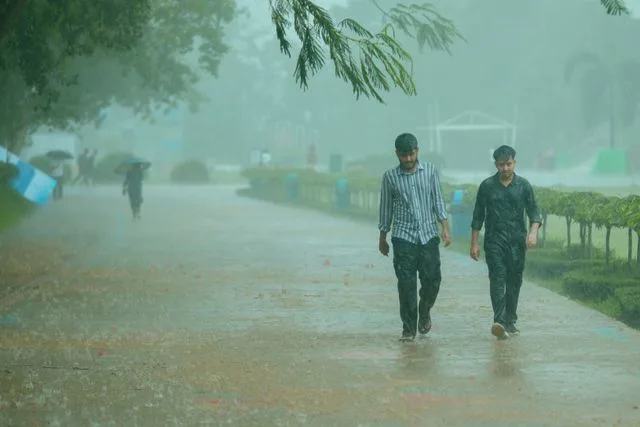
Photo by Md Nadim Mahmud on Pexels
“Delayed monsoon” is a tempting phrase. It is simple. It sounds clear. It also needs caution.
India’s monsoon is too large and too regional to describe carelessly. A delay in one region does not always mean the entire monsoon is delayed. A good rainfall week in one part of the country does not mean the whole country is safe. A strong burst of rain does not automatically solve a rainfall deficit.
So I would use a sharper phrase: uneven monsoon stress.
That is closer to what people actually experience.
A late shower is not the same as reliable rainfall. Farmers do not need just one dramatic rain event. They need usable rainfall at the right time. Sowing decisions depend on timing, soil moisture, local forecasts, crop choice, and whether the rain is likely to continue. Too little rain delays work. Too much rain at once can damage fields or make them unworkable.
Cities have a different problem. Urban India often struggles not because it never rains, but because rain arrives in intense bursts. Drainage systems are tested quickly. Roads flood. Traffic collapses. Low-lying neighbourhoods take the hit first. And because many cities have lost natural drainage, wetlands, open soil, and tree cover, heavy rain turns into disruption faster than it should.
Then comes humidity.
This is where the human body notices the weather before the official language catches up. A temperature number may look slightly lower after clouds arrive, but if humidity rises, the body may still struggle to cool itself. Sweat does not evaporate as easily. Nights feel heavier. Sleep gets worse. People wake up tired.
That matters.
We often talk about monsoon relief as if rain automatically solves the heat. Sometimes it does. Sometimes it only changes the kind of discomfort.
This is why India’s current weather deserves a proper explainer, not a routine alert article. The story is not only “rainfall warning” or “heatwave warning.” The story is that the transition between summer and monsoon is becoming a risk zone of its own.
And honestly, that is where public communication often falls short.
People need to know what to do when the weather does not fit one neat label.
Europe’s heatwave is a warning India should not ignore
At first, Europe’s heatwave may sound like a separate story. It is happening far away. Different continent, different climate, different infrastructure.
But we should not dismiss it.
Europe’s recent heatwave has shown something very clearly: extreme heat does not only affect countries that are “used to heat.” It can strain rich countries too. It can hit railways, hospitals, power systems, rivers, farms, elderly people, outdoor workers, and daily routines. It can turn normal summer into a public-health crisis.
That point matters for India.
Europe has stronger infrastructure than many parts of the world, but heat still finds weak spots. Rail tracks can be affected. Roads can soften or crack. Rivers can warm and run low. Power systems can face stress. Hospitals and emergency services can see more calls. Older people, people with existing illnesses, and those living alone become especially vulnerable.
Heat is not just a temperature reading. It is a pressure test.
And India has its own pressure points.
We have dense cities. Huge numbers of outdoor workers. Construction labourers. Delivery riders. Street vendors. Farmers. Informal housing. Uneven access to cooling. Water stress in many regions. Crowded public transport. Children and elderly people living in homes that heat up badly during the day and do not cool down enough at night.
This is where I think Europe’s heatwave becomes useful as a warning, not as a comparison contest.
India already knows heat. That does not mean India is safe from it.
In fact, familiarity can become dangerous. People get used to suffering through hot weather. They ignore early symptoms. Employers may treat heat as normal. Schools and offices may delay decisions. Families may not check on elderly relatives until the situation is already serious.
That casual attitude is risky.
Europe’s heatwave should kill one lazy assumption: that infrastructure alone protects people from extreme weather. It helps. Of course, it helps. But it does not make any country immune.
Heat breaks systems quietly. Then suddenly.
Are India’s monsoon stress and Europe’s heatwave connected?
This is the section where we need to be careful.
It would be irresponsible to say Europe’s heatwave directly caused India’s monsoon pattern unless a meteorological agency or serious climate analysis supports that specific claim. Weather systems can interact across regions, but direct cause-and-effect claims are not something we should throw around casually.
The better answer is more nuanced.
India’s current monsoon stress and Europe’s heatwave may not be directly connected as a single event. But both sit inside a broader global pattern: heat extremes are becoming stronger, rainfall behavior is becoming harder to rely on, and seasonal weather is increasingly creating risks that overlap.
Same planet, different symptoms.
Europe is showing the heat side of the story. India is showing the messy transition between heat, humidity, monsoon rain, and uneven relief. Other regions may face drought, wildfire risk, storms, or flooding. The symptoms differ, but the deeper problem is that human systems were built around older expectations of weather.
That is the part we should take seriously.
Climate science has been clear on the broad direction: a warmer climate increases the frequency and intensity of hot extremes, and it can intensify the water cycle, bringing heavier rainfall and stronger wet-dry swings in many regions. That does not mean every weather event has the same cause. It means the background conditions are changing.
Think of it this way.
If the baseline temperature rises, heatwaves start from a higher floor. If the atmosphere holds more moisture, rainfall events can become more intense when conditions trigger rain. If cities trap heat because of concrete, asphalt, traffic, and limited green space, the felt temperature can become worse than the regional forecast suggests.
None of this requires panic. But it does require honesty.
The honest answer is not “everything is directly linked.” The honest answer is more uncomfortable: the background conditions are changing, and that makes local weather events hit harder.
That is the smarter way to explain this to readers.
What this could mean for India in the coming weeks
The most useful question is not whether this weather is “normal” in a broad seasonal sense.
The useful question is, "What can it affect?"
A lot, actually.
Farming: rain timing matters more than rain headlines
For Indian agriculture, the timing of rainfall can be as important as the total rainfall. Farmers need rain that supports sowing and early crop growth. A delayed or weak start can affect decisions. A sudden heavy spell can also create trouble if fields become waterlogged or work is delayed.
This is why national rainfall headlines can be misleading. A headline may say heavy rain is expected, but the farmer’s real question is local: will my field get usable rain at the right time?
There is also livestock stress. Heat affects animals, too. Water availability, fodder quality, shade, and disease risk can all become concerns during hot-humid transitions and heavy-rain periods.
The practical point is simple: India cannot treat the monsoon as only a rainfall number. Distribution matters. Timing matters. Local impact matters.
Cities: rain does not automatically mean relief
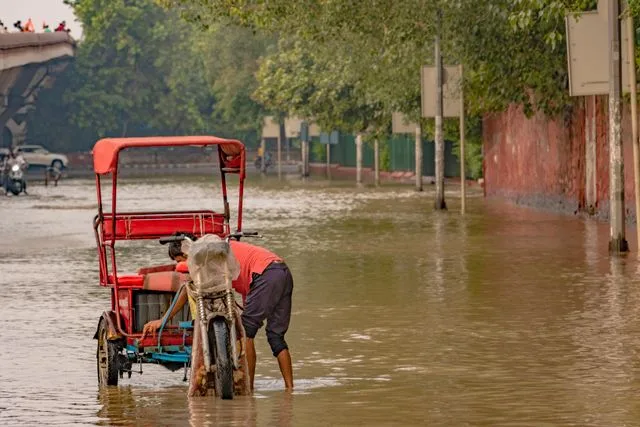
Photo by @shantumsingh on Pexels
Urban India has a different weakness.
When the monsoon comes gently, cities can manage. When rain comes in intense spells, drainage becomes the first test. Roads flood, traffic slows, underpasses become dangerous, and low-income neighborhoods often suffer first.
Then there is the heat-humidity trap.
A cloudy day may reduce direct sunlight, but if humidity rises and airflow is poor, the body may still feel stressed. People living in small, poorly ventilated rooms may not get real relief. Nights can remain uncomfortable. Fans move warm air. Power cuts make everything worse.
This is where planning often fails. Cities prepare for summer heat as one problem and monsoon flooding as another. But real life does not separate them so neatly.
Increasingly, the problem is combined risk.
Hot days. Humid nights. Sudden heavy rain. Waterlogging. Power demand. Mosquito breeding. Traffic disruption. Poor sleep. Missed work. Health stress.
That is not one issue. It is a chain.
Health: heat and humidity are a dangerous pair
Heat risk is not only about the maximum temperature.
Humidity matters. Night temperature matters. Exposure matters. Age matters. Work conditions matter.
A healthy person sitting indoors with cooling and water is not facing the same risk as a construction worker, a traffic police officer, a delivery rider, a farmer, or an elderly person living alone in a hot room.
This is why public advice must be practical, not decorative.
Drink water. Avoid unnecessary outdoor exposure during peak heat. Watch for dizziness, confusion, weakness, heavy sweating, or stopped sweating. Check on elderly people. Keep children hydrated. Do not leave pets in closed vehicles or hot rooms. Give outdoor workers rest and shade.
These sound basic. They are basic. But basic steps save lives when followed early.
India should stop treating heatwaves and monsoon floods as separate seasonal problems. Increasingly, they overlap, and that overlap is where public planning gets weak.
Weather awareness sounds boring until the day it saves you from a flooded road, heat illness, or a bad travel decision.
So what should people actually do?
First, check official alerts. Not only viral screenshots. Not random WhatsApp forecasts. Use IMD, state disaster management updates, local municipal alerts, and credible news outlets that clearly mention official sources.
Second, do not assume rain means the heat risk is over. If humidity is high, if nights are warm, or if you are doing outdoor work, the body can still be under stress.
Third, plan travel carefully during heavy rain warnings. A flooded underpass, a landslide-prone road, or a delayed train is not worth casual risk. This is especially true in hilly regions and flood-prone urban areas.
Fourth, protect vulnerable people early. Elderly relatives, infants, outdoor workers, people with heart or kidney conditions, and people without reliable cooling need more attention during heatwaves and hot-humid spells.
Fifth, think locally. National weather news is useful, but your real risk depends on your district, your city, your road, your work, and your house.
This is not about living in fear of the weather. That would be useless.
It is about respecting the fact that the weather now affects daily planning more directly than many people want to admit.
The real takeaway: India needs to prepare for mixed weather, not just bad weather
India’s current weather situation is confusing because the risks are overlapping.
The monsoon is advancing, but relief is uneven. Heavy rain is likely in some regions, but heat stress can still remain in others. Europe’s severe heatwave shows how quickly extreme heat can strain health systems, transport, rivers, agriculture, and electricity supply. The climate connection should be explained carefully, but the broad warning is hard to ignore: heat and rainfall extremes are becoming harder to manage.
The answer is not panic. It is preparation.
For governments, that means better local alerts, stronger city drainage, heat action plans, worker protections, hospital readiness, and farm advisories that people can actually use.
For ordinary people, it means checking alerts, respecting heat, planning travel around rain warnings, and paying attention to those most at risk.
The monsoon will bring relief. It always does, in some form.
But relief does not mean risk disappears.
The smarter question is not only, “Has the monsoon arrived?”
It is this:
Is India prepared for heat, heavy rain, humidity, flooding, and unstable weather arriving together?
That is the weather story worth paying attention to, not because it is dramatic but because it is already touching daily life.